Turn Company Stories Into Faceless Business Documentary Videos
Company stories already have a plot. Learn how to research one, script it and turn it into a faceless business documentary video with AI voice and visuals.

Roberto Pasqualini
CMO at Faceless Lab
How a brand started, nearly collapsed and came back makes a complete video story, and you can tell it with a voiceover and generated visuals instead of your face.
How do you make faceless business documentary videos? You pick one company story, check the facts against public sources, write a short script with a clear arc, then add an AI voiceover, visuals, music and captions. We are Stefano and Roberto, and we run faceless channels ourselves. This guide covers the exact process for a faceless business documentary channel and how to build each episode inside Faceless Lab.
Executive Summary: A faceless business documentary video tells the story of a company, product or founder decision in two to five minutes, using narration and generated visuals with no presenter on camera. The format works because business stories already contain a beginning, a conflict and an outcome, so the script nearly structures itself. The risk is accuracy, since viewers and the companies involved will notice wrong dates and numbers, so every claim should come from a public source such as company announcements, annual reports or reputable news coverage. In Faceless Lab you enter a topic, choose one of 8 video structures, pick a voice from 200+ ElevenLabs voices and one of 39 visual styles, and get a finished video with music and captions that you can schedule to publish. Autopilot is in beta, and TikTok needs your explicit consent before anything posts automatically. Plans start with a free trial at €0, then Starter at €19, Growth at €59 and Pro at €149.
Table of Contents
- Why business stories suit faceless channels
- Pick a story angle that holds a viewer to the end
- Research the facts before you write a word
- How to build a business documentary inside Faceless Lab
- Make it feel like a documentary without any footage
- Where Faceless Lab is and is not the right choice
- Keep the channel running after episode one
1. Why business stories suit faceless channels
Documentary-style channels have always leaned on narration. The viewer is listening to a story, and what they see is there to support it. That is the same shape as a faceless video, which makes business storytelling one of the most natural fits for the format.
What makes it work:
- Built-in structure. Most company stories follow a rise, a crisis and a result. The tension is already in the story, so your job is to find it.
- A wide supply of topics. Every well-known brand, product launch, failed product and pricing decision is a possible episode, so the idea list never runs dry.
- An audience that stays curious. People who watch one company story tend to watch the next, which helps a series build watch time.
- Visuals that do not need footage. You are illustrating ideas such as a garage, a factory floor, a boardroom or a shop window, and generated images handle that well.
If you already like money topics, this sits next to the format we described in Make Faceless Finance Videos for One of YouTube's Highest-Paying Niches. If you prefer the past, Build a Faceless History Channel That Posts a New Story Every Day uses the same narrated approach on a different subject.
2. Pick a story angle that holds a viewer to the end
A good episode has one question the viewer wants answered. "The history of a famous company" is too wide. "Why did this company bet everything on one product" gives the script a spine.
Angles we would start with
- The near-collapse. A company that almost ran out of money or lost its main customer, and what changed.
- The one decision. A single choice about price, product or timing that shaped everything after it.
- The product that failed. Failed launches are short, clear and easy to follow.
- The founder story. Where the idea came from and what the early months looked like.
- The rivalry. Two companies chasing the same customer, told fairly and from public information.
Choose a lane for the channel
Pick one lane so viewers know what to expect. Examples are retail brands, tech startups, food and drink companies, or small businesses with an unusual origin. A narrow lane makes your thumbnails, titles and voice feel consistent.
💡 Not sure which niche to commit to? The Faceless Niche Method is our PDF guide on choosing a faceless niche, with a scorecard and a 30-day validation plan. It is at a launch price of $2.79 right now, listed at $49 normally, so check the page for the current price.
3. Research the facts before you write a word
This is the step that decides whether your channel earns trust. A documentary voice sounds confident, so a wrong number sounds confidently wrong.
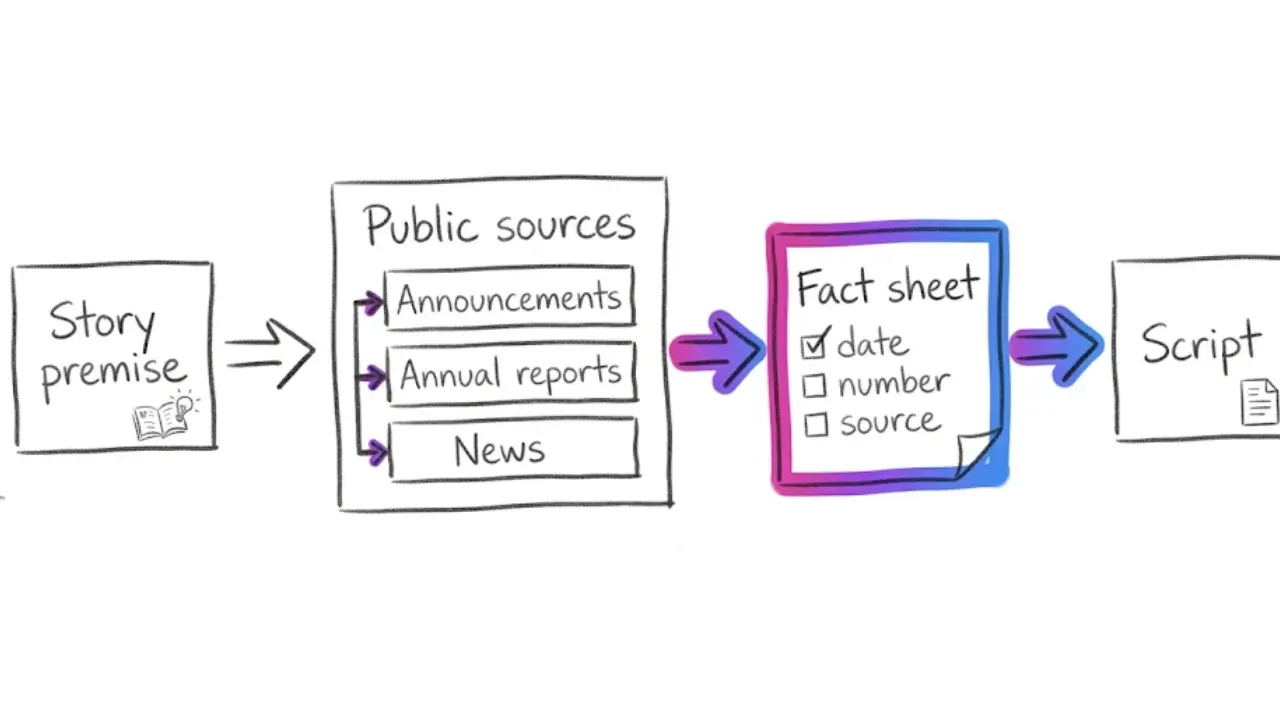
Use public, checkable sources:
- Company announcements and official blogs for launch dates and product details.
- Annual reports and regulatory filings for revenue, headcount and funding figures, when the company is public.
- Reputable news coverage and interviews for the story behind decisions.
- Books or long-form profiles for background, which you summarize in your own words.
Keep a simple fact sheet. For each episode, write down every date, number and name you plan to use, with the source next to it. Leave out any claim you cannot confirm.
Stay fair. Describe what happened and avoid guessing at motives or calling anyone names. If a story involves a dispute, stick to what is on the public record. This protects you and keeps the channel credible.
Use your own visuals. Do not reproduce a company's logo or ad footage in your video. Describe the scene in your script and let the generated visuals show it. If you are unsure about a brand name in a title, keep the title descriptive.
4. How to build a business documentary inside Faceless Lab
Here is the workflow we use for a single episode, from idea to scheduled video.
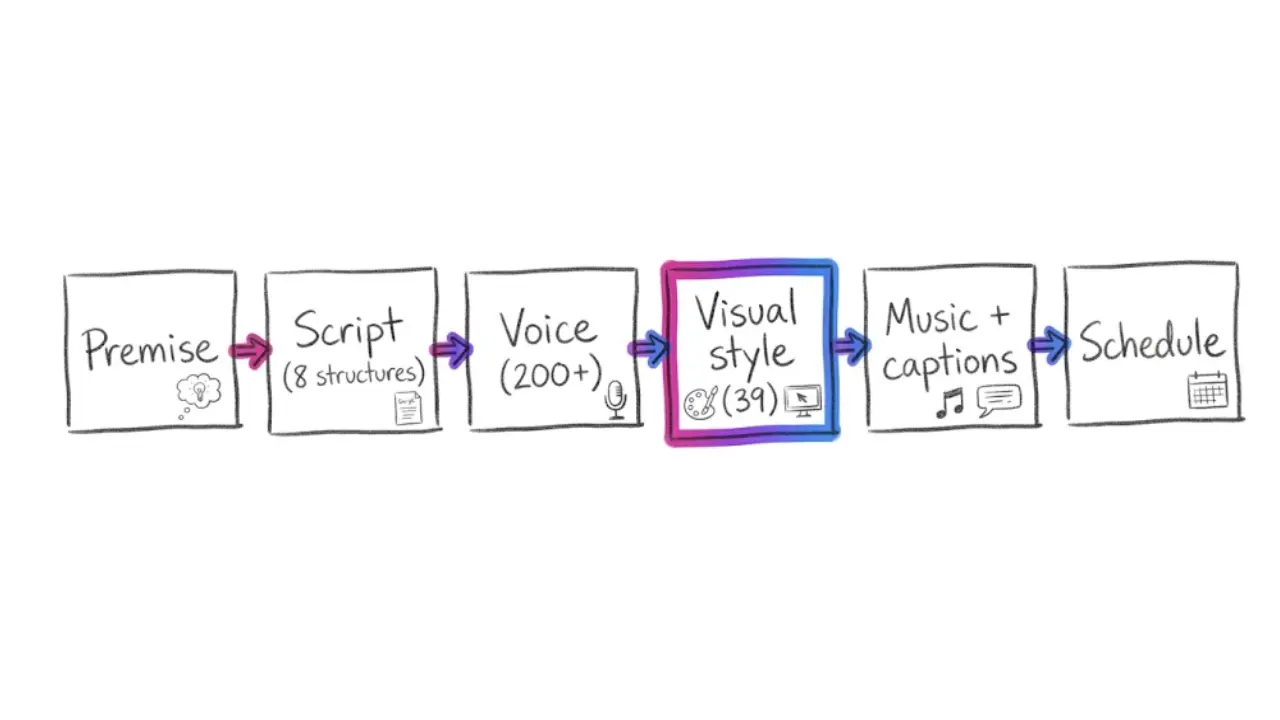
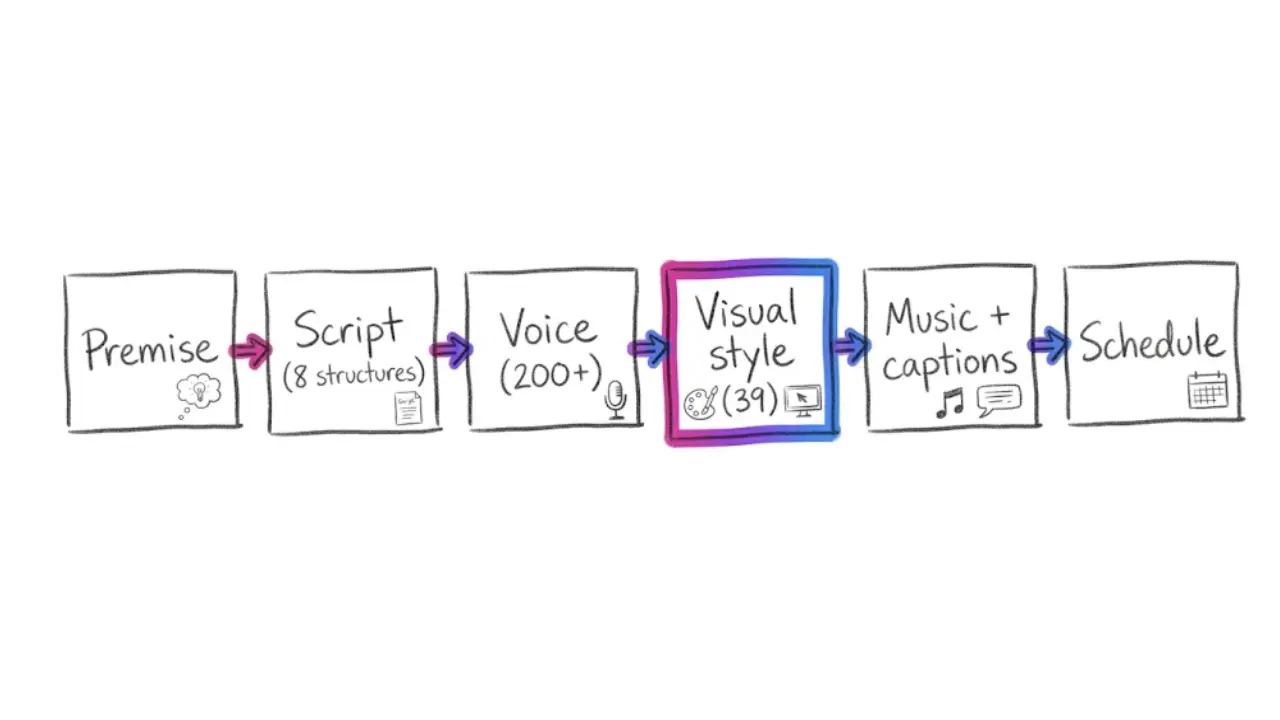
Step 1: Write the one-line premise. For example, "Why a small retailer risked everything on one product." Put your fact sheet in a note beside it.
Step 2: Generate the script. Enter the topic in Faceless Lab to generate scenes and a script. Choose one of the 8 video structures. For this niche, a story-led structure with a clear hook, a build and a payoff usually works best. If you want help choosing, The 8 Faceless Video Structures That Keep People Watching breaks them down.
Step 3: Edit the script against your fact sheet. Read every line and compare it with your sources. Change anything you cannot support. This is the most important edit you will make.
Step 4: Choose a voice. Pick from the 200+ ElevenLabs voices. A documentary usually suits a calm, steady voice. Listen to a few lines before you commit, and keep the same voice across the channel. The AI Voice You Pick Says More Than Your Script Does goes deeper on this.
Step 5: Choose a visual style. Select one of the 39 visual styles. Visuals are generated through multiple AI models via Replicate. A grounded, cinematic or illustrated look fits business stories better than a cartoon one.
Step 6: Let music and captions fill in, then review. Background music and subtitles are added in the same pass. Watch the video once with sound on, then once with sound off to check the captions carry the story.
Step 7: Schedule it. Faceless Lab supports auto-publish and scheduling to social platforms. TikTok is excluded from fully automatic auto-publish and needs your explicit consent.
💡 Want to try this on one company story? Start your free trial and build your first episode before you spend anything.
5. Make it feel like a documentary without any footage
The difference between a slideshow and a documentary is pacing and consistency, and you can control both.
Open with the turning point. Start on the most interesting moment, then go back and explain how it happened. The first few seconds decide whether people stay, as we cover in Write Faceless Video Scripts That Hook in the First Three Seconds.
Change the image often. A new visual every few seconds keeps the video moving. Each scene should show what the narrator is saying at that moment.
Keep one look. Use the same visual style and voice for every episode so your channel is recognizable. Your Faceless Channel Needs One Visual Style, Not a New Look Every Video explains why.
Match the length to the story. Faceless Lab's site focuses on videos of 15 to 60 seconds and also mentions longer videos up to 5 minutes. A tight story can work as a short, and a fuller one can run as a longer video. If you are unsure, Faceless Video Length: What Actually Gets Watched to the End helps you decide.
Use captions well. Many people watch with sound off, so readable subtitles matter. They also help viewers follow names and numbers.
6. Where Faceless Lab is and is not the right choice
We would rather you know before you sign up.
It is a good fit if:
- You want script, voiceover, visuals, music and captions from one place.
- You plan to publish episodes on a regular schedule and want scheduling built in.
- You are happy to supply and check the facts, and use the tool to turn them into a finished video.
- You want to test the idea first. The free trial is €0, and paid plans are Starter at €19, Growth at €59 and Pro at €149.
It is probably not the right pick if:
- You need real archive footage, interviews or screen captures of a company's product. Faceless Lab generates visuals, it does not source licensed footage.
- You want the tool to research and verify the story for you. You need to check every fact yourself.
- You need fully automatic posting to TikTok. That platform needs your consent.
- You need Autopilot to be fully finished. It is in beta and still improving.
7. Keep the channel running after episode one
One episode proves the format. A series builds the channel. Once you have a voice, a style and a script structure you like, each new company story takes less effort than the last.
Build a backlog. Write ten premises in one sitting and keep them in a list. Pull the next one whenever you are ready to produce.
Batch your work. Research on one day, generate and review on another, schedule the week in one go. How Do You Batch a Month of Faceless Videos in One Afternoon in 2026? shows how.
Think in series. Group episodes by theme, such as "retail comebacks" or "products that flopped". Autopilot, which is in beta, is built for producing related videos from one setup, and Turn One Idea Into a Faceless Video Series That Runs on Autopilot covers how to approach it.
Review what people finish. Check which episodes keep viewers to the end and make more of those angles.
Verdict
Business documentary videos are one of the better fits for a faceless channel because the stories come with structure and the format rewards good narration over a personal presence. The work is in the research and the script, and the tool handles the production. If you want to test it, the free trial lets you build an episode before you commit to a plan. If the hardest part for you is choosing the niche in the first place, we put our full process into The Faceless Niche Method, so the lane you pick is one you have actually validated.
If this guide helped, share it with a creator who has been wondering what to make next. If you run a newsletter, page or channel where it would land well, we also have an affiliate program and would love to hear from you.
Try Faceless Lab free and build your first business documentary video
Read More
Frequently asked questions
What is a faceless business documentary video?
A faceless business documentary video tells the story of a company, product or founder decision using narration and generated visuals, with no presenter on camera. Most run between two and five minutes and follow a simple arc of a beginning, a problem and an outcome. Because the story is carried by the script and the voice, the format suits AI video tools well. The part that needs your attention is accuracy, so build every episode from public sources such as company announcements, annual reports and reputable news coverage.
How do I find topics for a business documentary channel?
Start with one lane, such as retail brands, tech startups, food and drink companies or small businesses with an unusual origin. Then list angles inside it, like a near-collapse, a single decision that changed everything, a failed product, a founder origin or a rivalry. Write ten premises in one sitting so you always have a backlog. Each premise should be a question a viewer wants answered, for example why a company bet everything on one product, since that gives the script a clear spine.
How do I keep the facts accurate in a faceless business video?
Keep a fact sheet for every episode that lists each date, number and name you plan to use, with its source beside it. Prefer official announcements, annual reports, regulatory filings for public companies and reputable news coverage. Remove any claim you cannot confirm, and describe what happened without guessing at motives. After the AI script is generated, read it line by line against your fact sheet, because the tool turns your facts into a video and does not verify them for you.
Can I make business documentary videos with Faceless Lab?
Yes. You enter a topic, choose one of the 8 video structures, and Faceless Lab generates the scenes and script. You then pick a voice from 200+ ElevenLabs voices and one of 39 visual styles, and background music and captions are added in the same pass. You can schedule the finished video to publish. It generates its own visuals and does not source licensed archive footage, so it suits narrated stories and not footage-driven documentaries.
How long should a faceless documentary video be?
It depends on the story and the platform. Faceless Lab's site focuses on videos of 15 to 60 seconds and also mentions longer videos up to 5 minutes. A tight story with one clear turning point can work as a short. A fuller story with a build and a payoff may need two to five minutes. Open with the most interesting moment, change the image often and check which episodes people watch to the end, then adjust the length to match.
How much does it cost to start a faceless business channel?
You can start with the Faceless Lab free trial at €0 and build your first episode before paying. Paid plans are Starter at €19, Growth at €59 and Pro at €149. Your main cost beyond that is time, since research and fact checking take longer than production. Autopilot, which helps produce related videos from one setup, is in beta. TikTok needs your explicit consent before anything posts automatically, so plan to confirm those posts yourself.
Related articles
Start a Faceless Tech Tips Channel With Shorts That Teach One Trick at a Time
Phone tricks, shortcuts and AI prompts make great short videos, and none of them need your face. Here is how to pick an angle, lock a format and publish tech tips on a schedule.
Earn From TikTok Creator Rewards With a Faceless Account, Step by Step
Creator Rewards pays for original videos over a minute from accounts with 10,000 followers. Here is how a faceless TikTok account can build toward it, with a 30-day plan and honest limits.
9:16, 16:9 or 1:1? Pick the Right Frame for Every Faceless Video Before You Make It
Which frame should your faceless videos use? A clear guide to 9:16, 16:9 and 1:1 for Shorts, Reels, TikTok, Facebook and LinkedIn, plus how to set it up.