Make Faceless Skeleton Shorts That Teach Anatomy in 30 Seconds
Skeleton shorts turn body facts into quick, rewatchable videos with no host on screen. Here is how to script, make and schedule a faceless skeleton channel, and keep it going after the trend cools.

Stefano Ventrudo
CTO at Faceless Lab
How to script, make and schedule faceless skeleton videos, from the best body-fact formats to keeping one consistent look, plus what to do when the trend cools down.
Can you make skeleton videos without filming anything or showing your face? Yes. A skeleton short is a character, a voiceover and one surprising body fact, which is exactly what a faceless workflow does well. We (Stefano and Roberto) run faceless channels every day, and skeleton shorts are one of the formats we see creators testing right now. If you want to start a faceless skeleton channel, this guide covers the formats, the steps and the mistakes to avoid.
Executive Summary. Faceless skeleton videos are short vertical clips where an animated skeleton character illustrates a body fact, a health question or a science idea while an AI voiceover explains it, with captions and music on top. The format works because each video asks one curious question and answers it in under a minute, so viewers finish it and often watch it again. The simplest way to start is to choose one angle, keep one character and one visual style, and post on a steady schedule for 30 days. Faceless Lab turns an idea or script into a finished vertical video in minutes and schedules it to YouTube, Instagram, Facebook and LinkedIn, with TikTok kept as a manual confirmation. The free trial costs €0, and paid plans are Starter €19, Growth €59 and Pro €149.
Table of Contents
- Why skeleton shorts took off without a presenter
- Pick a body-fact angle you can repeat
- Six skeleton video formats to start with
- How to make a skeleton short inside Faceless Lab
- Keep it accurate, original and labeled
- What to do when the trend cools
- Where Faceless Lab fits and where it does not
1. Why skeleton shorts took off without a presenter
A skeleton is a ready-made faceless character. It has no identity to protect, it is instantly readable on a small screen, and it can act out almost any body topic. A viewer sees a skeleton cracking its knuckles and wants to know the answer before the sentence ends.
Here is why the format fits short-form video:
- One question per video. "What happens to your bones when you sit all day?" is a complete video.
- The visuals carry the idea. Anatomy is easier to show than to describe, so the character does half the explaining.
- It is easy to repeat. The same character, the same layout and a new body part every day make a recognizable series.
- It needs no camera. Everything is generated, which suits anyone who wants to stay off screen.
The risk with any trend is that everyone copies the same video. The channels that last are the ones with a clear angle and a consistent look, so most of this guide is about those two things.
2. Pick a body-fact angle you can repeat
"Skeleton videos" is a format, and a format alone does not make a channel. Pick the angle first, then let the skeleton illustrate it.
- The body-facts channel. Surprising facts about bones, joints, muscles and organs, one per video.
- The daily-habits channel. What sitting, sleeping, walking or scrolling does to your body, explained in general terms.
- The myth-buster channel. "Does cracking your knuckles cause arthritis?" and similar questions, answered with careful wording.
- The history-of-the-body channel. How we learned what is inside us, told in short stories.
Choose the angle you can keep up for 30 days. Picking an angle with a clear audience also makes the next idea easy to find, because the questions people ask about their bodies never run out.
💡 Not sure this niche is the right one for you? Test it before you commit a month of posting. The Faceless Niche Method is our guide with a scorecard, a gap-finder and a 30-day validation plan. The page shows a launch price of $2.79 (regular price $49), so check it for the current offer.
3. Six skeleton video formats to start with
Faceless Lab has 8 structures built into the app, and several of them suit skeleton content well. Here are six formats to try.
- The one-fact short. One surprising fact, shown by the skeleton, in 20 to 30 seconds.
- The myth versus fact. The skeleton reacts to a common belief, then shows what the evidence says.
- The countdown. "Five things your spine does every day," counted down to the most surprising.
- The what-if. "What if you had no knees for a day?" A playful hypothetical with a clear answer.
- The body-part tour. One joint or bone per video, in a repeating layout.
- The habit check. A daily habit and what it does to your posture or joints, in general terms and without medical claims.
Mix two or three of these and repeat them. A channel that posts the same shape every day is easier to grow than one that changes style with every upload.
4. How to make a skeleton short inside Faceless Lab
Here is the path from idea to scheduled video. Once your style is set, it takes a few minutes per video.
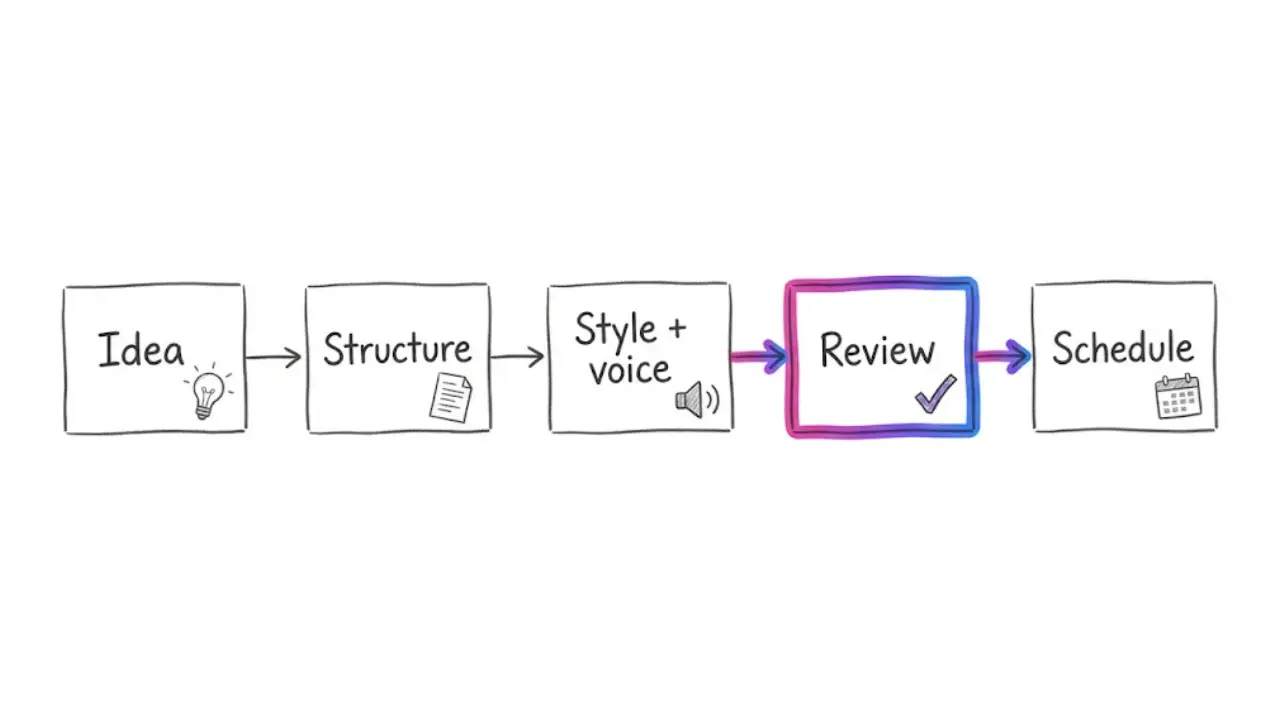
- Open the dashboard. Start on the free trial. No credit card is needed.
- Type the idea or paste your script. Something like "what sitting all day does to your spine, with a skeleton character" is enough to start.
- Choose a structure. Pick the one that matches your format, such as a countdown or a myth versus fact.
- Pick one visual style and one voice. Choose from 39 visual styles and more than 200 ElevenLabs voices, then keep both for the whole run so the channel looks and sounds consistent.
- Choose the aspect ratio. Use 9:16 for Shorts, Reels and TikTok. 16:9 and 1:1 are available too.
- Generate and review. The app writes the script with scenes, records the voiceover, builds the visuals, and adds captions and music. Read it once and fix any line that is vague or wrong, especially anything about health.
- Schedule it. Connect your accounts, set the days and times, and let approved videos go out on schedule.
Faceless Lab uses multiple AI models through Replicate for visuals, so you can keep the look steady across a run instead of working around the limits of one model. If you plan a daily format, Series keeps it repeating, and Autopilot (beta) can help keep the cadence going.
💡 Ready to build your first one? Create a free account and open the dashboard, then make your first skeleton short today.
5. Keep it accurate, original and labeled
Body content comes with a few responsibilities, and getting them right protects your channel.
- Check every fact. Verify claims with a reliable source before you publish, and keep wording general. A short video is not the place for specific medical advice.
- Do not give diagnoses or treatment advice. Say "talk to a doctor" for anything personal. This is general education, not medical guidance.
- Add your own angle. Platforms favor original content. A recognizable character, your own scripts and a consistent voice make your channel yours instead of a copy of the trend.
- Label AI content where required. Some platforms ask you to mark AI-generated or altered content. Read the current policy before you publish.
- Avoid copying other channels. Use the format, not another creator's script, character or branding.
Rules change and this is not legal advice, so check the current policies of each platform you post on.
6. What to do when the trend cools
Any trend has a shelf life. The good news is that a skeleton channel does not depend on the trend, because it depends on body questions, and people keep asking them.
Here is how to keep it going:
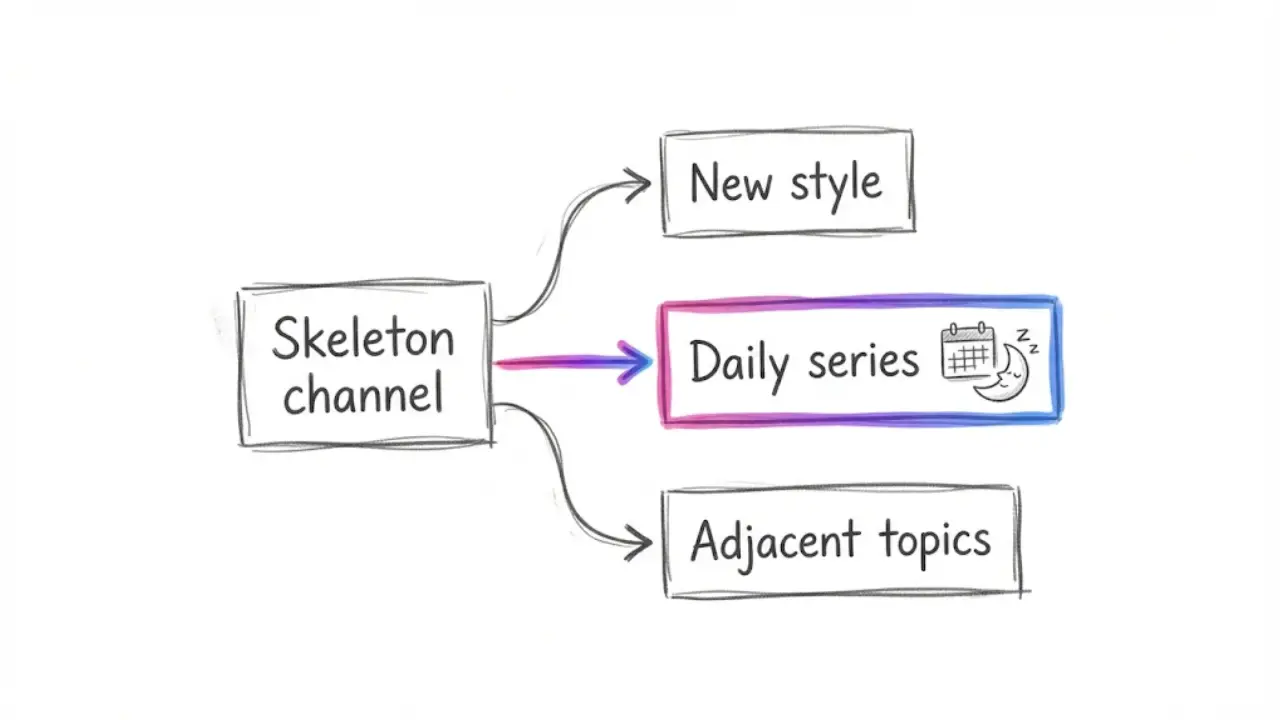
- Keep the angle, change the visuals. If skeleton clips feel crowded, move the same scripts to another style, such as a clean diagram look or a simple animated character.
- Lean into the series. A daily format with a recognizable name outlasts a trend.
- Branch into adjacent topics. Sleep, posture, hydration and everyday science sit close to body facts and bring the same audience.
- Use your own numbers. After two weeks, check which videos held attention and make more of those.
7. Where Faceless Lab fits and where it does not
We would rather you pick the right tool than any tool, so here is our honest read.
Faceless Lab is a strong fit when:
- You want to post on a steady schedule. Script, voiceover, visuals, music, captions and scheduling live in one place.
- You want one consistent look. One style and one voice across the channel make it recognizable.
- You want to start cheap. The free trial is €0, and the paid plans are Starter €19, Growth €59 and Pro €149.
It is a weaker fit when:
- You need medically reviewed content. Faceless Lab generates the script and visuals, but it does not fact-check health claims, so that review is on you.
- You want fully hands-off TikTok. TikTok needs your explicit consent, so those posts stay manual.
- You want complex 3D character animation. The app builds short-form videos from your idea, and a heavy custom animation pipeline is a different kind of tool.
The verdict. Skeleton shorts are a good way to turn body curiosity into a repeatable format. Pick one angle, keep one character and one style, check your facts, and post three to five times a week for the next 30 days. You can run all of it on the free trial and decide on a plan later.
If you are still deciding what your channel should be about, The Faceless Niche Method can help you test the choice before you commit to a month of posting.
If this helped, repost it to a creator who loves science content, and if you want to earn while you share, our affiliate program pays you for the people you send our way.
Start your skeleton channel today and try Faceless Lab free.
Read more
Frequently asked questions
What are faceless skeleton videos?
Faceless skeleton videos are short vertical clips where an animated skeleton character illustrates a body fact, a health question or a science idea while a voiceover explains it. Captions and music sit on top, and nobody appears on camera. The format works because each video asks one curious question and answers it in under a minute. In Faceless Lab you type the idea, pick a structure, a visual style and a voice, and the app builds the script, narration, visuals, captions and music for you.
Can I make skeleton shorts without filming anything?
Yes. Everything in a skeleton short is generated: the character, the scenes, the voiceover and the captions. In Faceless Lab you type an idea or paste a script, choose one of the 8 structures, pick a visual style and a voice, and generate the video. You review the script once, fix anything vague, and schedule it. No camera, no microphone and no editing timeline are needed, which also keeps your face and your voice private if you prefer.
How do I keep my skeleton channel from looking like everyone else's?
Choose a clear angle and stay consistent. A body-facts channel, a habits channel or a myth-buster channel each has its own audience and its own tone. Use one character, one visual style and one voice across every video, and write your own scripts instead of copying another creator's. Platforms favor original content, and a recognizable look helps viewers remember you. Faceless Lab lets you keep the same style and voice across a whole run.
Do I need to label skeleton videos as AI-generated?
Often yes, depending on the platform. Some platforms ask creators to mark AI-generated or altered content, and the rules change from time to time. Read the current policy of each platform before you publish, and apply the label where it is required. Being open about AI use also builds trust with viewers. This is general information and not legal advice, so check the official policy of each platform you post on.
Is it safe to post health content in a faceless format?
It can be, if you keep it general and accurate. Verify every claim with a reliable source, avoid diagnoses and treatment advice, and tell viewers to talk to a doctor about anything personal. Faceless Lab generates scripts and visuals, but it does not fact-check health claims, so reviewing the script before you publish is your job. Educational body facts and everyday science are a safer starting point than specific medical guidance.
How much does it cost to start a skeleton channel with Faceless Lab?
You can start free. The free trial costs €0 and needs no credit card, which is enough to test your first videos and see whether the workflow fits. Paid plans are Starter at €19, Growth at €59 and Pro at €149, with higher limits as you move up. Many creators run the trial through their first batch of skeleton shorts, then choose a plan once they know how often they want to publish.
Related articles
Make Faceless Year-in-Review Videos Before the December Recap Wave
Recap videos flood every feed in December. Here is how to build a faceless year-in-review series with the script, voice and visuals handled for you, and schedule it all before the rush.
Cyber Monday Lands on November 30. Get Your Faceless Deal Videos Scheduled First
Cyber Monday is under three weeks away. Learn which deal video formats get saved, how to write honest picks with AI voice and visuals, and how to schedule the whole run before November 30.
Make AI Fruit Drama Videos That Keep People Watching Episode After Episode
Talking-fruit soap operas took over short-form feeds. Here is how to make your own faceless fruit drama series, from the story format to the script, the voices and the posting plan.